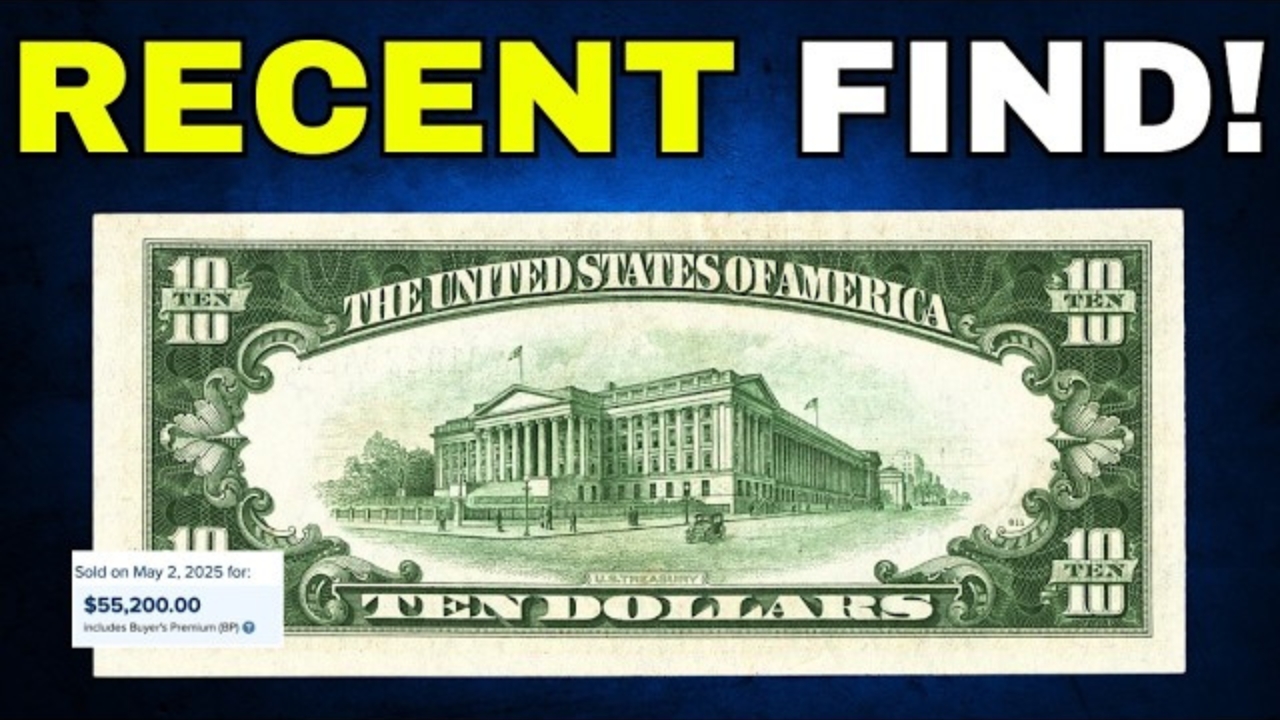
Money is something we use every day, yet most of us rarely stop to think about its hidden potential beyond face value. For coin collectors and currency enthusiasts, ordinary bills can sometimes transform into extraordinary treasures. Among the most captivating examples is the story of a $10 star note that stunned the numismatic world when it sold for $55,200. This remarkable event highlights how rarity, history, and collector demand can elevate a simple piece of paper into a fortune.
What Is a Star Note
To understand why this particular $10 bill became so valuable, it is important to know what a star note is. In the United States, when a bill is misprinted or damaged during production, it is replaced with a new one. Instead of reusing the same serial number, the Bureau of Engraving and Printing issues a replacement note with a star symbol at the end of the serial number. These star notes are relatively scarce compared to regular notes, making them highly collectible.

Collectors often seek star notes because they represent a unique production process and carry an aura of rarity. While most star notes are worth only slightly more than their face value, certain issues can command astonishing prices depending on condition, age, and scarcity.

The $10 Star Note That Shocked Collectors
The star note in question was a $10 bill that appeared ordinary at first glance. However, its rarity and pristine condition made it a standout piece. When it went to auction, expectations were high, but few anticipated the final hammer price of $55,200.
This sale was not just about the note itself but about the story it carried. Collectors recognized that this particular star note was part of a limited run, with very few surviving examples in such immaculate condition. The combination of rarity and desirability created a bidding frenzy that drove the price far beyond its face value.
Why Condition Matters
In the world of numismatics, condition is everything. A star note that has been folded, stained, or circulated heavily will not attract the same attention as one that looks crisp and untouched. Grading agencies evaluate notes based on factors such as sharpness of print, absence of creases, and overall eye appeal.

The $10 star note that sold for $55,200 was graded at an exceptionally high level. Its flawless preservation made it a trophy piece for serious collectors. This demonstrates how condition can transform a collectible from being merely interesting to being truly extraordinary.
The Role of Auctions in Currency Collecting
Auction houses play a critical role in bringing rare currency to market. They provide a platform where collectors can compete for prized items, often driving prices to record levels. The sale of the $10 star note is a perfect example of how auctions amplify excitement and create opportunities for rare finds to achieve their full value.

Collectors often rely on auctions not only to acquire rare pieces but also to gauge the market. A high-profile sale like this sets benchmarks and influences the perceived value of similar notes.
Historical Significance of Star Notes
Star notes are not just replacements; they are symbols of the meticulous process behind currency production. Each one tells a story of quality control and precision. Historically, star notes have intrigued collectors because they represent a deviation from the norm.
The $10 star note that reached $55,200 is now part of a broader narrative about how small details in currency can carry immense significance. It reminds us that even the most ordinary-looking bill can hold extraordinary value if it carries the right characteristics.
Lessons for Collectors and Investors
The dramatic rise in value of this star note offers important lessons for collectors and investors alike. First, it underscores the importance of knowledge. Understanding what makes a note rare, how to identify star notes, and how condition affects value is essential.
Second, it highlights patience. Many collectors hold onto notes for years, waiting for the right moment to sell. Timing can make a significant difference in achieving maximum value.
Finally, it demonstrates that collectibles can be a form of investment. While not every star note will reach tens of thousands of dollars, the potential exists for ordinary currency to appreciate dramatically over time.
The Broader Market for Rare Currency
The sale of the $10 star note is part of a larger trend in the collectibles market. Coins, banknotes, and other forms of currency have seen rising interest as alternative investments. Collectors are drawn to the tangible nature of currency, its historical significance, and the thrill of uncovering hidden gems.
Rare currency auctions often attract international bidders, reflecting the global appeal of numismatics. As more people discover the excitement of collecting, demand for unique pieces continues to grow.
How to Spot Valuable Notes
For those inspired by the story of the $10 star note, the natural question is how to find valuable notes in everyday life. While most bills in circulation are worth only their face value, there are a few signs to look for:
- Star symbols at the end of serial numbers
- Unusual serial number patterns such as repeating digits or palindromes
- Notes in pristine, uncirculated condition
- Limited print runs or historically significant issues
By paying attention to these details, collectors can increase their chances of discovering hidden treasures.
The Human Element of Collecting
Beyond the financial aspect, collecting currency is deeply human. Each note carries a story, whether it is about production quirks, historical events, or personal discovery. The thrill of finding a rare star note in circulation is akin to uncovering a piece of history.
The $10 star note that sold for $55,200 represents more than just money. It symbolizes curiosity, passion, and the pursuit of rarity. For collectors, the joy lies not only in the value but in the journey of discovery.
Conclusion
The extraordinary sale of a $10 star note for $55,200 is a reminder that treasures can be hidden in plain sight. What appears to be ordinary cash can, under the right circumstances, transform into a fortune. For collectors and investors, it is a testament to the power of rarity, condition, and demand.
Currency collecting is more than a hobby; it is a window into history and a pathway to unexpected rewards. The story of this star note will continue to inspire enthusiasts, proving that sometimes the most remarkable fortunes begin with the simplest discoveries.