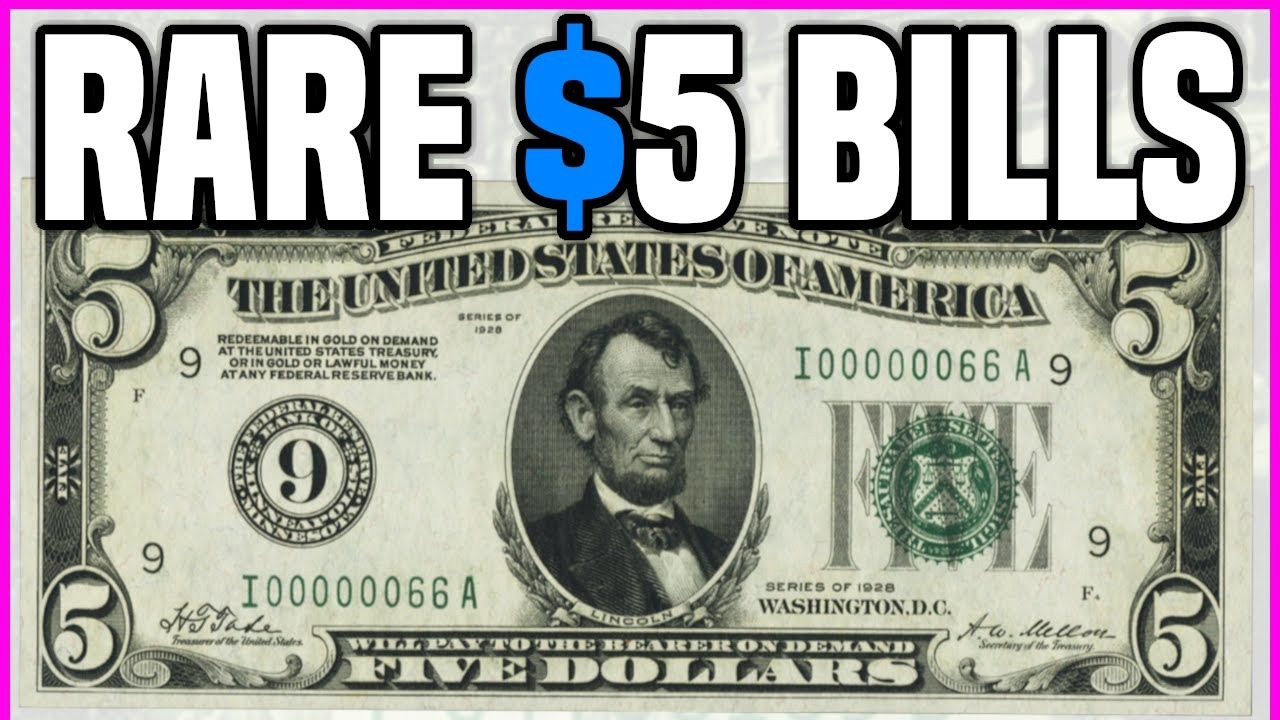
Collectors have always been drawn to the stories behind coins and paper money. While coins often steal the spotlight with their metallic shine and historical engravings, paper currency carries its own allure. Among the most intriguing pieces are rare $5 bills that feature misprints or star notes. These notes are not only fascinating for their unusual characteristics but also for the value they can hold in the numismatic market. Understanding what makes them rare and how to identify them is essential for anyone interested in paper money collecting.
What Makes a $5 Bill Rare
A $5 bill becomes rare when it deviates from the standard production process. The United States Bureau of Engraving and Printing produces millions of notes each year, and while the process is highly controlled, mistakes occasionally slip through. These errors, known as misprints, can transform an ordinary bill into a collectible item. Similarly, star notes are special replacements issued when a defective bill is removed from circulation. Both categories create scarcity, which is the foundation of collectible value.

Misprints and Their Types
Misprints are among the most exciting finds for collectors because they represent a tangible error in a system designed for precision. Several types of misprints can occur on $5 bills.
- Offset Printing Errors: This happens when ink from one side of the bill transfers onto the other, creating a mirrored or ghost-like image.
- Misaligned Prints: Sometimes the design is printed off-center, leaving uneven margins or cutting into the design itself.
- Missing Elements: A bill may lack a seal, serial number, or other critical detail due to a printing malfunction.
- Folded Errors: If the paper folds during printing, part of the design may be missing or distorted.
Each type of misprint has its own level of rarity and desirability. Collectors often pay more for dramatic errors that are visually striking and easily identifiable.
The Story Behind Star Notes
Star notes are another category of rare $5 bills that collectors seek. When a bill is found defective during production, it is replaced with a new one. To distinguish these replacements, the Bureau of Engraving and Printing adds a small star symbol at the end of the serial number. This star indicates that the note is part of a limited replacement run, making it scarcer than regular notes.
Star notes are not errors but intentional replacements. Their rarity comes from the fact that fewer star notes are printed compared to standard bills. For collectors, the presence of a star adds a layer of uniqueness and desirability.

How to Identify Rare $5 Bills
Identifying rare $5 bills requires careful observation. Collectors should examine the following features:
- Serial Numbers: Look for stars at the end of the serial number.
- Printing Quality: Check for misaligned designs, missing seals, or unusual ink patterns.
- Paper Condition: Crisp, uncirculated notes are worth more than worn ones.
- Series Year: Certain years may have higher incidences of misprints or limited star note runs.
A magnifying glass and good lighting can help spot subtle errors. Collectors often rely on reference guides and auction records to confirm whether a bill is genuinely rare.

The Value of Misprints and Star Notes
The value of rare $5 bills depends on several factors. Misprints that are dramatic and obvious tend to command higher prices. For example, a bill missing its serial number or seal can be worth hundreds of dollars. Star notes, while more common than misprints, can also be valuable if they are from a limited run or in pristine condition.
Condition plays a critical role. A crisp, uncirculated star note may sell for significantly more than a circulated one. Rarity, demand, and historical significance all combine to determine the market value. Collectors often consult auction results to gauge current pricing trends.
Historical Examples of Rare $5 Bills
Throughout history, several notable misprints and star notes have captured the attention of collectors. Some $5 bills have been discovered with upside-down seals, missing serial numbers, or dramatic ink smears. These examples serve as reminders that even in a highly controlled production environment, human error and mechanical mishaps can create treasures.
Star notes from certain series years, such as those with limited replacement runs, have also become highly sought after. Collectors often compete fiercely at auctions to secure these pieces, driving prices upward.
Why Collectors Value Misprints and Star Notes
Collectors value these rare $5 bills for more than just their monetary worth. They represent anomalies in a system designed for perfection. Owning a misprint or star note is like holding a piece of history that tells a story of human error, correction, and scarcity.
For many collectors, the thrill lies in the hunt. Discovering a rare bill in circulation or acquiring one through trade brings a sense of accomplishment. These notes also serve as conversation pieces, sparking interest among fellow enthusiasts and newcomers alike.
Tips for Collectors Entering the Market
For those new to collecting rare $5 bills, a few tips can help guide the journey:
- Start Small: Begin by learning to identify star notes, which are easier to find than misprints.
- Educate Yourself: Study reference materials and auction records to understand market values.
- Network with Collectors: Join clubs or online forums to share knowledge and experiences.
- Handle Notes Carefully: Use protective sleeves to preserve condition and avoid damage.
Patience is key. Rare finds do not appear every day, but persistence and knowledge increase the chances of success.
The Future of Rare $5 Bill Collecting
As technology improves, the likelihood of misprints decreases. Modern printing processes are more precise, reducing the chances of dramatic errors. This makes existing misprints even more valuable, as they represent a bygone era of production flaws.
Star notes will continue to be produced as replacements, but their scarcity ensures they remain collectible. The future of rare $5 bill collecting lies in the balance between historical pieces and modern finds. Collectors who appreciate both will enjoy a diverse and rewarding collection.
Conclusion
Rare $5 paper money, whether misprints or star notes, offers collectors a unique glimpse into the world of currency production. These notes are more than just pieces of paper; they are artifacts of history, error, and scarcity. For collectors, they represent the excitement of discovery and the satisfaction of owning something truly unique.
Whether you are a seasoned numismatist or a beginner, exploring the world of rare $5 bills can be a rewarding journey. By learning to identify misprints and star notes, understanding their value, and appreciating their stories, you can build a collection that reflects both history and rarity.