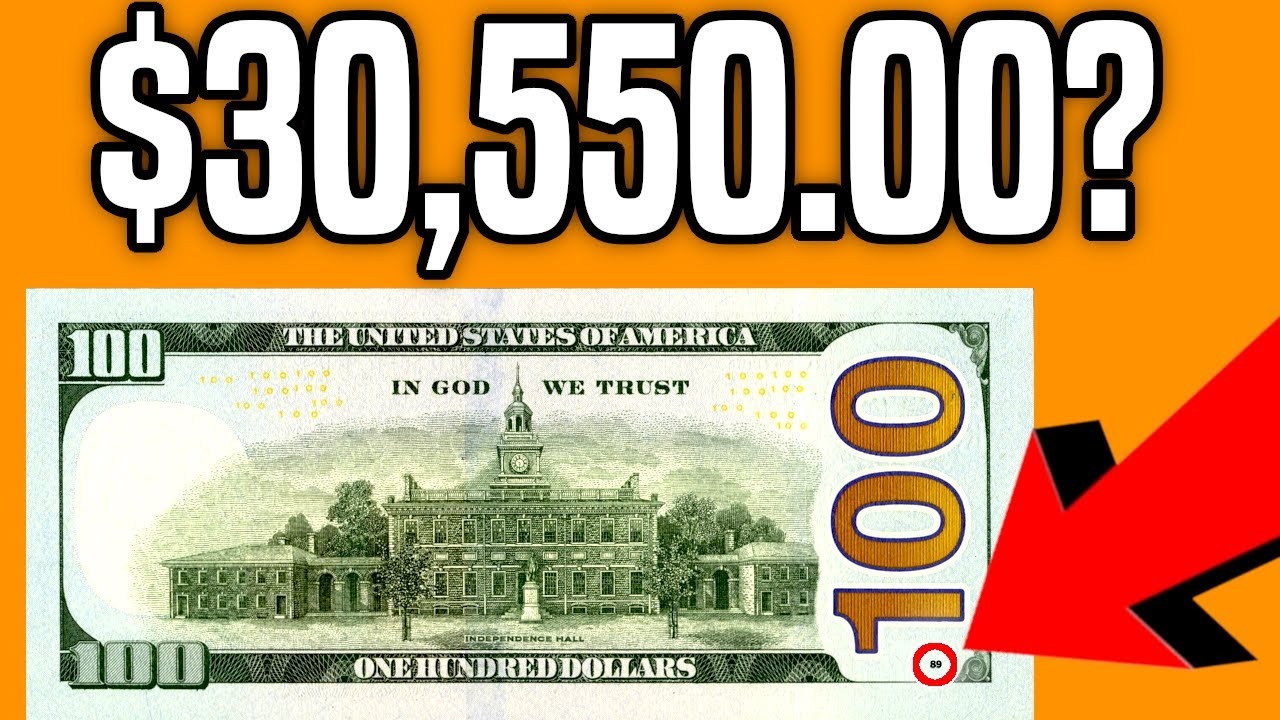
The $100 bill is one of the most recognized pieces of U.S. currency, symbolizing wealth, prestige, and financial power. While most $100 bills are worth exactly their face value, a select group of ultra-rare notes has captured the attention of collectors worldwide. These bills, often distinguished by printing errors, unique serial numbers, or historical significance, can fetch thousands of dollars at auctions and private sales. For numismatists and investors alike, rare $100 bills represent not only a fascinating piece of history but also a lucrative opportunity. In this article, we will explore 31 ultra-rare $100 bills that are commanding big money in today’s collector market.
Key Highlights
- Rare $100 bills can be worth thousands due to printing errors, unique serial numbers, or historical context.
- Collectors prize bills with star notes, low serial numbers, and misprints.
- Older series, especially those from the 19th and early 20th centuries, are highly valuable.
- Condition and grading play a crucial role in determining a bill’s worth.
- Some modern $100 bills with unusual features are already selling for more than face value.
- Investing in rare currency requires knowledge of authenticity, rarity, and market demand.
The Allure of Rare $100 Bills
Collectors are drawn to rare $100 bills for several reasons. First, they represent a tangible piece of American history, often tied to significant economic eras. Second, rarity creates exclusivity, making these bills highly desirable. Finally, the thrill of discovering a valuable note in circulation adds excitement to the hobby. Unlike coins, paper money is more fragile, which makes surviving examples in pristine condition even more valuable.
Historical Context of the $100 Bill
The $100 bill was first issued in 1862 during the Civil War, featuring a portrait of Abraham Lincoln. Over time, the design evolved, with Benjamin Franklin becoming the iconic face of the denomination. Each redesign reflected changes in security features, printing technology, and artistic trends. Rare notes from earlier series are especially prized because fewer have survived the passage of time.

Factors That Make a $100 Bill Valuable
Several elements contribute to the rarity and value of a $100 bill:
- Printing errors such as misaligned seals, missing serial numbers, or inverted backs.
- Star notes, which replace damaged bills during production and are printed in limited quantities.
- Low serial numbers, especially those starting with multiple zeros.
- Unique patterns like repeating digits or “radar” numbers that read the same forward and backward.
- Historical series from the 19th and early 20th centuries.
- Condition, with uncirculated notes commanding the highest premiums.
Table of Rare $100 Bill Categories
| Category | Description | Example Value Range |
|---|---|---|
| Printing Errors | Misprints, inverted seals, missing elements | $2,000 – $15,000 |
| Star Notes | Replacement notes with a star in serial number | $500 – $5,000 |
| Low Serial Numbers | Bills starting with multiple zeros | $1,000 – $10,000 |
| Fancy Serial Numbers | Radar, ladder, or repeating digit patterns | $500 – $7,500 |
| Historical Series | Notes from 1860s–1930s | $3,000 – $50,000+ |
| High-Grade Modern Rarities | Contemporary bills in pristine condition | $200 – $2,000 |
Ultra Rare $100 Bills with Printing Errors
Printing errors are among the most sought-after features in rare currency. A $100 bill with a misaligned seal or missing serial number can be worth thousands. In some cases, entire sheets were misprinted, leading to dramatic errors such as inverted backs. These mistakes are rare because most are caught during quality control, making surviving examples highly valuable.
Star Notes That Command Premiums
Star notes are replacement bills issued when a printing error occurs. They are marked with a star symbol at the end of the serial number. Because they are printed in smaller quantities, star notes are rarer than standard issues. Collectors especially prize star notes from older series, which can sell for several thousand dollars depending on condition.

The Value of Low Serial Numbers
Bills with low serial numbers, such as 00000001 or 00000100, are highly collectible. These notes are often saved by bank employees or collectors who recognize their rarity. The lower the number, the higher the value. A $100 bill with a serial number under 100 can easily fetch thousands at auction.
Fancy Serial Numbers That Attract Collectors
Fancy serial numbers add another layer of intrigue. Radar notes, which read the same forward and backward, ladder notes with sequential digits, and repeating patterns are all highly desirable. Collectors often pay significant premiums for these notes, especially when combined with star symbols or low numbers.
Historical $100 Bills from the 19th Century
The earliest $100 bills, issued during the Civil War, are among the rarest. Notes featuring Abraham Lincoln or allegorical figures are highly prized. Because paper money from this era was fragile, few examples survive today. When they do appear at auction, they can command tens of thousands of dollars.
The 1929 Small Size $100 Bill
In 1929, the U.S. transitioned to small-size currency, closer to the dimensions we use today. The 1929 $100 bill is rare in high grades, especially those with unique serial numbers or star notes. Collectors value these notes for their historical significance and scarcity.
The 1934 Series $100 Bill
The 1934 series introduced new design elements and security features. Bills from this series in uncirculated condition are highly collectible. Star notes and low serial numbers from 1934 are especially valuable, often selling for thousands.
The 1966 Red Seal $100 United States Note
One of the most distinctive $100 bills is the 1966 red seal United States Note. Unlike Federal Reserve Notes, these bills carried a red seal and were issued in limited quantities. Today, they are rare and highly sought after, with values reaching several thousand dollars depending on condition.
The 1990s Security Thread Introduction
In the 1990s, the U.S. introduced security threads and microprinting to combat counterfeiting. Early examples of these bills with errors, such as missing threads, are rare and valuable. Collectors prize these transitional notes for their role in modernizing currency.
Modern $100 Bills with Unique Features
Even contemporary $100 bills can be valuable if they have unusual features. Misprints, star notes, and fancy serial numbers from recent series are already selling for more than.