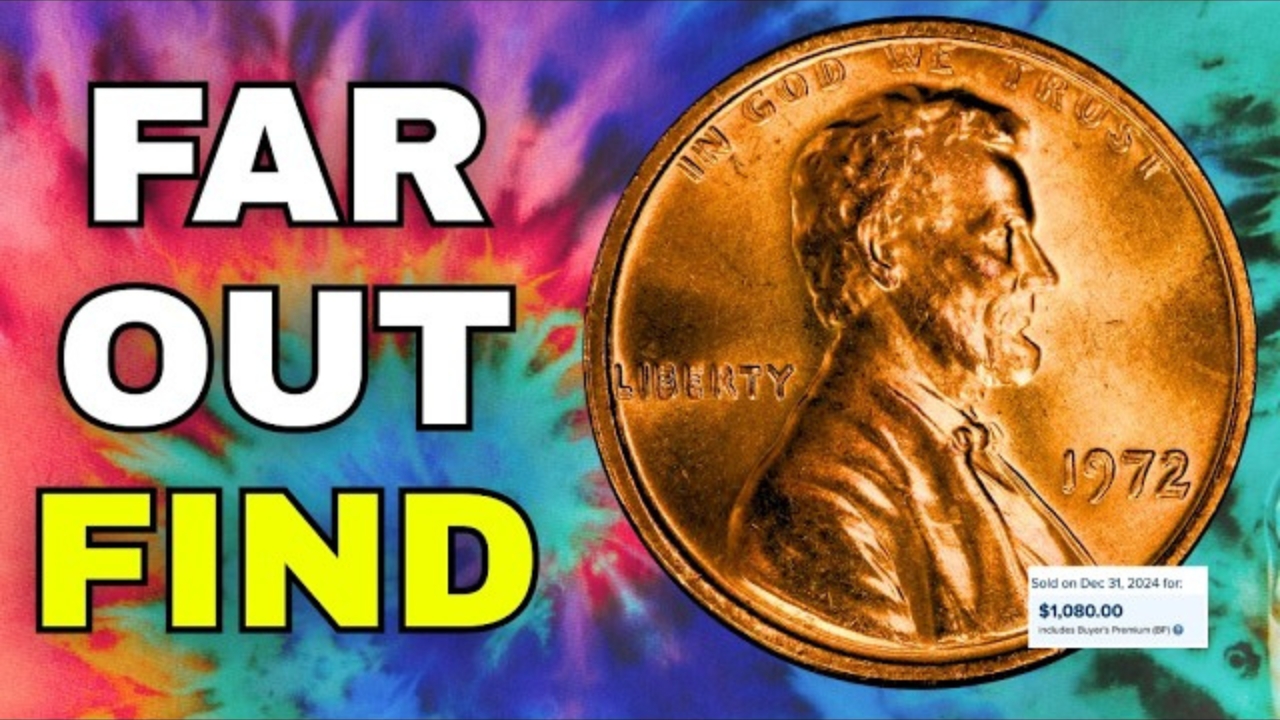
The 1972 Lincoln cent belongs to the long-running Lincoln Memorial series, which was minted from 1959 until 2008. Designed by Frank Gasparro, the reverse of the coin features the Lincoln Memorial, while the obverse continues Victor David Brenner’s iconic portrait of Abraham Lincoln first introduced in 1909. By 1972, the Lincoln cent had already become a familiar coin in circulation, but certain varieties and minting errors from that year have made some examples far more valuable than their one cent face value.
Understanding the historical context is important because the early 1970s were a period of transition in American coinage. Rising production costs and changes in minting technology led to a variety of errors and doubled die coins, which collectors now prize. The 1972 penny is a perfect example of how a seemingly ordinary coin can hold hidden value.
The Standard 1972 Penny
Most 1972 pennies are common and were struck in large numbers at the Philadelphia, Denver, and San Francisco mints. The Philadelphia mint produced the majority, with no mint mark, while Denver coins carry a small D and San Francisco coins carry an S. These coins were made of copper, with a composition of 95 percent copper and 5 percent zinc.
In circulated condition, a regular 1972 penny is worth only its face value. Even in uncirculated condition, most examples are worth between a few cents and a couple of dollars depending on grade. However, the real excitement comes from the doubled die obverse variety, which has become one of the most famous error coins in American numismatics.
The Doubled Die Obverse Variety
The 1972 doubled die obverse penny is the star of the series. This variety was created when the coin die received a misaligned impression during the hubbing process, resulting in noticeable doubling on the obverse design. Collectors can easily spot this doubling in the inscriptions “LIBERTY” and “IN GOD WE TRUST,” as well as in the date itself.
There are several different doubled die varieties from 1972, but the most dramatic and valuable is known as “1972 doubled die obverse number one.” This variety shows strong doubling that can be seen without magnification, making it highly desirable among collectors. Other minor doubled die varieties exist, but they are less valuable and require closer inspection to identify.
Value of the 1972 Doubled Die Penny
The value of a 1972 doubled die penny depends heavily on its condition. In circulated grades, even worn examples can sell for $100 or more. In higher grades, the value increases dramatically. Uncirculated examples graded by professional services often sell for several hundred dollars, and coins in top condition can reach into the thousands.
For example, a mint state 65 red 1972 doubled die obverse penny has been known to sell for over $1,000 at auction. The rarity of finding such a coin in pristine condition makes it a prized possession for collectors. This is why searching through old penny rolls or coin jars can sometimes yield a surprising treasure.
Other Varieties and Proof Coins
In addition to the famous doubled die obverse, the 1972 penny also exists in proof versions struck at the San Francisco mint. Proof coins were specially made for collectors, featuring sharp details and mirror-like surfaces. While most proof coins from 1972 are not particularly rare, they can still hold value depending on condition.
Some proof coins also exhibit minor doubled die features, though these are less dramatic than the main variety. Collectors who specialize in proof coinage often seek these out, adding another layer of interest to the 1972 series.
How to Identify a Valuable 1972 Penny
Identifying a valuable 1972 penny requires careful examination. The most important step is to look closely at the obverse inscriptions and the date. Strong doubling will be obvious, with letters and numbers appearing doubled or shadowed. A magnifying glass or jeweler’s loupe can help confirm the details.
It is also important to distinguish between true doubled die coins and machine doubling. Machine doubling occurs when the coin shifts slightly during striking, creating a flat and shelf-like doubling effect. True doubled die coins, on the other hand, show rounded and distinct doubling that is part of the die itself. Collectors and grading services recognize only true doubled die coins as valuable varieties.
Collecting and Investing in 1972 Pennies
For collectors, the 1972 doubled die penny represents both a challenge and an opportunity. Finding one in circulation today is rare, but not impossible. Searching through old rolls of pennies or inherited coin collections can sometimes yield unexpected discoveries.
From an investment perspective, the 1972 doubled die penny has proven to be a strong performer. Its value has remained steady over the years, with high-grade examples continuing to attract strong demand at auctions. While not every 1972 penny will be worth more than face value, the potential of finding a valuable variety makes collecting them exciting.
Preservation and Grading
If you believe you have found a valuable 1972 penny, proper preservation is essential. Coins should be handled carefully by the edges to avoid fingerprints and scratches. Storing them in protective holders or albums helps maintain their condition.
Professional grading services such as PCGS or NGC can authenticate and grade coins, providing assurance to buyers and sellers. A certified grade can significantly increase the value of a coin, especially for rare varieties like the 1972 doubled die obverse.
The Legacy of the 1972 Penny
The 1972 penny demonstrates how even modern coins can hold hidden treasures. While millions of ordinary cents were minted that year, the doubled die obverse variety has captured the imagination of collectors for decades. Its dramatic doubling and strong market value make it one of the most famous error coins in American history.
For casual collectors, the 1972 penny is a reminder to always check pocket change carefully. For serious numismatists, it represents a cornerstone of modern error coin collecting. Whether found in circulation or purchased at auction, the 1972 doubled die penny continues to prove that a simple cent can be worth far more than its face value.
Conclusion
The 1972 penny is more than just a coin from the past. It is a symbol of how minting errors can transform ordinary currency into valuable collectibles. While most 1972 pennies are worth only a cent, the doubled die obverse variety has elevated this coin into numismatic fame. Collectors and investors alike continue to seek out these rare examples, ensuring that the legacy of the 1972 penny endures.