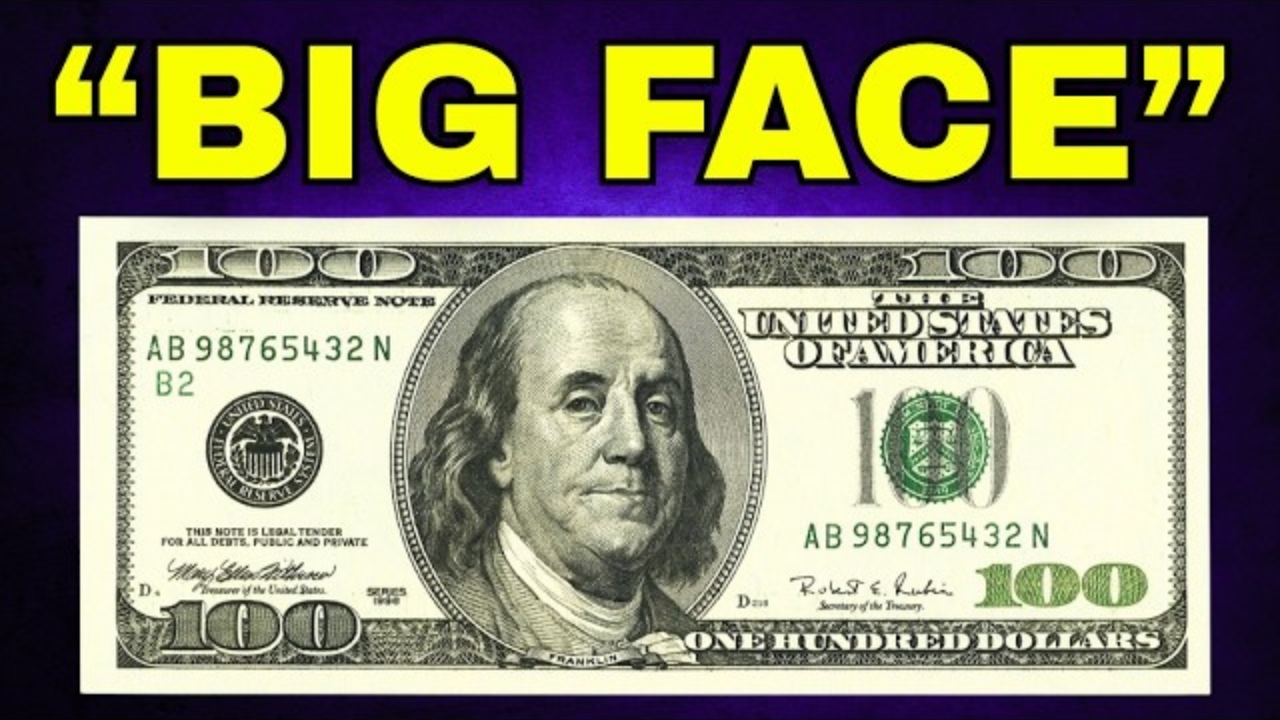
Most people treat paper money as a simple medium of exchange. You receive it, you spend it, and you rarely think twice. Yet when it comes to the $100 bill, there is far more at stake than meets the eye. This denomination is one of the most counterfeited notes in circulation, and it also carries hidden collectible value depending on its series, condition, and rarity. Checking every $100 bill before spending is not just about avoiding counterfeit currency, it is also about recognizing whether you are holding a note worth far more than its face value.
A Brief History of the $100 Bill
The $100 bill has long been associated with prestige and wealth. Featuring Benjamin Franklin, one of the most influential figures in American history, the note has undergone multiple redesigns since its introduction in the 19th century. Early versions were larger in size and carried ornate engravings. Over time, the bill evolved into the modern design we recognize today, complete with advanced security features. Each redesign was not only meant to improve durability but also to combat counterfeiting. Collectors often seek out older series, especially those in pristine condition, which can command significant premiums in the numismatic market.

Security Features You Should Know
Modern $100 bills are equipped with a range of security features that make them difficult to replicate. These include color-shifting ink, a 3D security ribbon, watermarks, and microprinting. The blue security ribbon woven into the paper is particularly distinctive, showing alternating images of bells and numbers when tilted. The watermark of Franklin’s portrait is visible when held up to light, and the color-shifting numeral in the lower right corner changes from copper to green depending on the angle. Familiarity with these features is essential for anyone handling cash, as counterfeiters often attempt to mimic them but rarely succeed in perfect replication.
Why Counterfeit Bills Are a Real Risk
Counterfeit $100 bills circulate more than many people realize. Criminals target this denomination because of its high value and widespread use. Businesses that fail to check notes carefully risk financial loss, since banks will not reimburse counterfeit currency once it is deposited. For individuals, unknowingly spending a fake bill can lead to embarrassment or even legal trouble. By taking a few seconds to examine the note, you protect yourself from these risks. The effort is minimal compared to the potential consequences of accepting counterfeit money.
Collectible Value Beyond Face Amount
Not all $100 bills are equal in value. Certain series, printing errors, and unique serial numbers can make a note worth hundreds or even thousands of dollars to collectors. For example, star notes, which replace damaged bills during production, are highly sought after. Low serial numbers, repeating digits, or unusual patterns can also increase desirability. Bills from discontinued series, especially those in uncirculated condition, often fetch premiums well above their face value. This means that the $100 bill in your wallet could secretly be a collectible treasure if you know what to look for.
Condition Matters More Than You Think
Collectors place enormous emphasis on condition. A crisp, uncirculated $100 bill with sharp corners and no folds is far more valuable than a worn, circulated note. Grading services evaluate paper money on a scale, considering factors such as color brightness, paper quality, and printing clarity. Even a small crease or smudge can reduce value significantly. For everyday use, condition may not matter, but for collectors, it can be the difference between a bill worth $100 and one worth $1,000.

Famous Printing Errors and Rarities
Printing errors add another layer of intrigue to the $100 bill market. Misaligned seals, missing security features, or inverted serial numbers can turn an ordinary note into a rare collectible. These errors are relatively uncommon, which is why they command high premiums. Some error notes have sold for thousands of dollars at auction. Spotting such anomalies requires careful inspection, but the payoff can be substantial. This is yet another reason why checking every $100 bill is worthwhile.
The Role of the $100 Bill in Global Circulation
The $100 bill is not just popular in the United States. It is widely used around the world, often serving as a preferred store of value in countries with unstable currencies. In fact, more $100 bills circulate outside the United States than within. This global demand makes the note even more attractive to counterfeiters, while also increasing its importance in international trade and finance. Understanding its role in global circulation highlights why the U.S. Treasury invests heavily in security features and redesigns.

How to Check Your $100 Bill Quickly
Examining a $100 bill does not require special equipment. A simple routine can help you verify authenticity and spot potential collectible value. First, hold the bill up to light to check for the watermark and embedded security thread. Tilt the note to observe the color-shifting ink and the 3D security ribbon. Run your fingers across the surface to feel the raised printing. Finally, glance at the serial number to see if it contains unusual patterns or is part of a star note. This quick inspection takes less than a minute but can save you from counterfeit losses or help you discover hidden value.
Stories of Hidden Value Found in Wallets
There are countless stories of individuals discovering rare notes in everyday circulation. A person might receive a $100 bill with a unique serial number at a grocery store, only to later find it worth several times its face value. Others have stumbled upon star notes or discontinued series tucked away in old wallets or family heirlooms. These stories serve as reminders that valuable currency is not always locked away in collections or museums. Sometimes, it is sitting unnoticed in your pocket.
Why Businesses Must Train Employees
For businesses, especially those handling large amounts of cash, employee training is critical. Cashiers and clerks should be familiar with the security features of the $100 bill and know how to spot counterfeits. Many businesses invest in counterfeit detection pens or ultraviolet lights, but human awareness remains the first line of defense. Proper training reduces financial risk and ensures smooth transactions. It also builds customer trust, since patrons feel confident that the business takes currency security seriously.
The Future of the $100 Bill
As technology advances, so too will the design of the $100 bill. The U.S. Treasury continually researches new security features to stay ahead of counterfeiters. Future notes may incorporate advanced holograms, digital tracking, or even embedded chips. While these innovations aim to protect the integrity of the currency, they also raise questions about privacy and practicality. Regardless of future changes, the principle remains the same: checking your $100 bill is essential for both security and potential value.
Final Thoughts
The $100 bill is more than just paper money. It is a symbol of wealth, a target for counterfeiters, and a potential collectible with hidden value. By taking the time to examine each note, you protect yourself from fraud and open the possibility of discovering a rare treasure. Whether you are a casual spender or a dedicated collector, the habit of checking your $100 bills is a small effort with potentially large rewards. Next time you hold one in your hand, remember that it may be worth far more than you think.